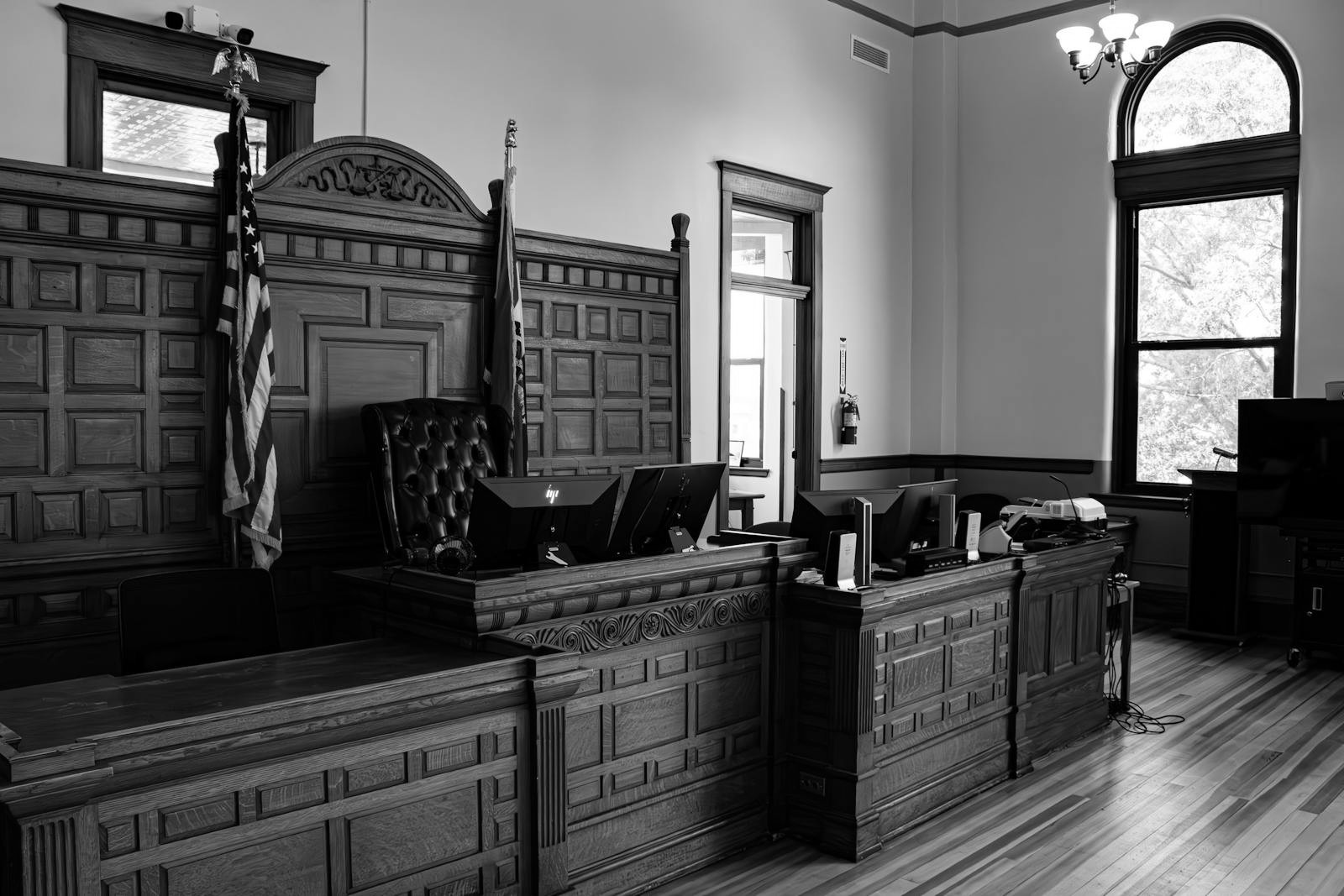
The Oakland jury that spent weeks listening to testimony about broken promises, billion-dollar lawsuits, and the future of artificial intelligence took less than two hours to deliver its answer: Elon Musk waited too long. Case dismissed.
It wasn’t the decision Musk’s legal team was hoping for. It wasn’t the decision anyone was hoping for, really — including, by the looks of it, the people who wanted to see the actual question litigated. Because what the jury answered wasn’t whether OpenAI breached a charitable trust. What it answered was whether Musk had any business asking that question this late.
Three years, the law says, for a breach-of-charitable-trust claim. Two years for unjust enrichment. Musk filed in 2024. The events at issue — OpenAI’s transition from nonprofit research lab to commercial juggernaut — happened in 2018, 2019, 2020. The math wasn’t close.
It took the nine-member advisory jury under two hours of deliberation to reach a unanimous decision. They threw out every claim, including the one against Microsoft for allegedly aiding and abetting Sam Altman and Greg Brockman. Judge Yvonne Gonzalez Rogers, who presided over the trial, didn’t blink. “I’ve always said I would accept the jury’s verdict,” she told the courtroom. Then she said something that mattered more.
Table of Contents
The Quote That Changes the Math on the Appeal
Marc Toberoff, Musk’s attorney, summed up the response in a single word the moment the verdict landed: “Appeal.” Musk himself took to X within hours, calling the verdict a “calendar technicality” and promising to take the case to the Ninth Circuit Court of Appeals.
But Judge Gonzalez Rogers — the same judge who controlled this trial from gavel to gavel — added a line that should worry Musk’s legal team more than the verdict itself.
She said she was prepared to dismiss the appeal “on the spot.”
That isn’t a procedural comment. That’s a judge signaling she finds the underlying case so weak on the timing question that she sees no path forward for it on appellate review. And appellate courts are generally not in the business of overturning fact-finders on statute-of-limitations questions when the timing facts aren’t in dispute. The math is the math. The dates are the dates. Musk’s team will argue that the clock should have started later — perhaps when Musk discovered some specific piece of the alleged breach — but that’s a steep hill in a courtroom that has already heard the evidence and shrugged.
What the Jury Did Not Decide
Here’s the part that should bother anyone interested in how this technology gets governed: the central question of Musk v. Altman was never actually answered.
Did OpenAI breach a charitable trust when it pivoted from nonprofit research lab to capped-profit company backed by Microsoft? Was the original 2015 commitment to keep AI development open and safe enforceable in court — or was it always just rhetoric? Can a handful of founders, a website’s mission statement, and a series of public promises actually constitute a legal obligation binding for decades?
We don’t know. The jury didn’t reach those questions. The trial spent weeks unpacking them, and then dismissed the entire case on the statute-of-limitations technicality before deciding any of the substantive issues.
Bloomberg Law’s coverage put it bluntly: the fight heads to appeal “with core claims untested.” For the AI industry, that’s the most consequential part of the entire outcome. The question of whether the public can hold AI labs accountable to their stated missions — through any legal mechanism — remains exactly where it was before the trial started.
What OpenAI Actually Wins
OpenAI’s leadership has spent the last 18 months in legal limbo. The lawsuit cast a shadow over its planned IPO, its capped-profit restructuring, its Microsoft partnership. Investors hate uncertainty, and a federal lawsuit alleging the entire company was built on a betrayed charitable promise is the kind of uncertainty that gives bankers nightmares.
With the verdict, that shadow lifts. OpenAI can now move forward with its IPO plans — reportedly on a fast track for September — without the question of whether Musk could win the company back hanging over it. Altman keeps his job. Brockman keeps his title. The capped-profit structure that has made OpenAI one of the most valuable private companies in history stays intact.
What OpenAI doesn’t get is closure on the moral question. There are still ex-employees, former board members, and AI researchers who believe the company betrayed its founding mission. The verdict doesn’t change their view. It just removes the legal mechanism for forcing the company to answer them.
What Musk Actually Loses
The conventional read is that Musk lost a lawsuit. That’s technically true but it understates what the verdict represents.
Musk built a meaningful chunk of his recent public identity around being the person who tried to save AI from itself — the founder who walked away from OpenAI when it betrayed its mission, who then sued to enforce that mission, who positioned his own AI company xAI as the principled alternative. That narrative leaned heavily on the implicit promise that the legal system would, eventually, vindicate him.
It didn’t. Worse — it didn’t even take the question seriously enough to litigate it. The dismissal on a procedural ground reads as the legal system saying: this isn’t even close. The actual merits don’t matter because you missed the deadline by years.
That’s harder to spin than a loss on the merits. A loss on the merits gives you something to appeal. A loss on a statute of limitations gives you a calendar dispute.
Why This Matters Outside Silicon Valley
For business owners watching from outside the AI industry, this verdict has a few quietly important implications.
The first: the foundational question of whether AI companies can be held to their stated missions remains untested. If you’re a business that relies on AI infrastructure — and at this point, that’s most businesses — you’re depending on a handful of companies whose long-term commitments to safety, openness, or anything else are not legally enforceable in any meaningful way. The promises in their mission statements are exactly as binding as the promises in their marketing materials. Which is to say: not.
The second: the timeline pressure has now lifted on OpenAI’s IPO. Expect an aggressive Q3/Q4 push. Expect that IPO to be one of the largest in history. Expect new pricing pressure on enterprise AI contracts as OpenAI works to justify a valuation that some analysts believe is already overheated.
The third: the appeal will keep this story in the news for another 12–24 months. Even if the Ninth Circuit dismisses it quickly, every filing, every brief, every procedural ruling becomes a news cycle. Musk’s legal teams know how to use that.
What Comes Next
The appeal will be filed. The Ninth Circuit will hear it on briefs, possibly with oral argument. Most observers expect the appellate court to side with the trial court — statute of limitations rulings rarely get overturned absent clear legal error, and there doesn’t appear to be one here. A ruling could come within 12 months.
In the meantime, OpenAI executes against the runway it just got back. Altman has reportedly accelerated the IPO timeline. The Microsoft partnership continues. The race against Anthropic, xAI, Google, and the next generation of model developers continues at whatever pace the underlying technology — and the unit economics — allow.
And somewhere, a parallel question continues to sit unanswered: when a small group of people build technology powerful enough to reshape how human society works, do they owe the public anything beyond what their lawyers can negotiate after the fact?
The Oakland jury didn’t answer that question. The Ninth Circuit isn’t going to either. It’s not the kind of question courts know how to answer.
It might be the kind of question we have to figure out together.
Frequently Asked Questions
What was Musk v. Altman about?
Musk alleged that Sam Altman and Greg Brockman violated a promise to run OpenAI as a charitable nonprofit, breaching a charitable trust and unjustly enriching themselves when the company pivoted to a capped-profit structure backed by Microsoft. He sought, among other remedies, billions in disgorgement to OpenAI’s charitable arm.
Why was the case dismissed?
The advisory jury found that Musk filed his lawsuit too late — outside the three-year statute of limitations for breach of charitable trust and the two-year window for unjust enrichment. The events at issue happened in 2018–2020; Musk filed in 2024.
Did the jury decide the merits?
No. The verdict was on the timing question only. The actual substantive question — whether OpenAI breached a charitable trust — was never decided.
Will Musk’s appeal succeed?
Most observers consider it unlikely. Judge Gonzalez Rogers indicated she was prepared to dismiss the appeal “on the spot,” and appellate courts generally defer to trial court findings on statute-of-limitations questions when the underlying timing facts are not in dispute.
What happens to OpenAI now?
OpenAI can proceed with its planned IPO — reportedly fast-tracked for September — without the uncertainty of an unresolved lawsuit. Altman keeps his leadership role. The capped-profit structure remains intact.
Does this end the question of whether AI companies can be held to their missions?
Legally, in this specific case, yes. More broadly, no. The verdict doesn’t establish that AI companies can never be held accountable — it only establishes that, in this case, the claim was filed too late. The underlying questions remain open for future cases brought within applicable time windows.
Related Coverage
- Musk v. Altman: Closing Arguments Conclude in Landmark AI Trial — our coverage of the closing arguments leading to this verdict
- The AI Agent Showdown: ChatGPT, Claude, Gemini, Perplexity — what the AI labs are actually building
- Best AI Writing Tools for Small Business in 2026 — what these AI companies look like from the business owner side
Faceted Media Magazine covered the closing arguments in our earlier piece. We’ll continue tracking the appeal as it moves through the Ninth Circuit.
Comments
3 responses to “Musk v. Altman Verdict: Jury Threw Out Lawsuit in Under Two Hours, and the Judge Signals the Appeal Will Die Too”
[…] UPDATE — May 24, 2026: The jury delivered its verdict on May 18, 2026. Read our coverage of the outcome and Musk’s appeal: Musk v. Altman Verdict: Jury Threw Out Lawsuit in Under Two Hours, and the Judge Signals the Appeal …. […]
[…] NextWhat Is Schema? The Invisible Framework Running the Internet (And Your Business) Musk v. Altman Verdict: Jury Threw Out Lawsuit in Under Two Hours, and the Judge Signals the Appeal …By Kimberly Hogate | 25 May, 26 | A federal jury in Oakland needed less than two hours… […]
[…] on the table, and Amazon has lawyers the way other companies have employees. Anyone who watched the Musk v. Altman verdict knows how long these AI legal sagas run, and how much can flip on appeal. This is the opening […]